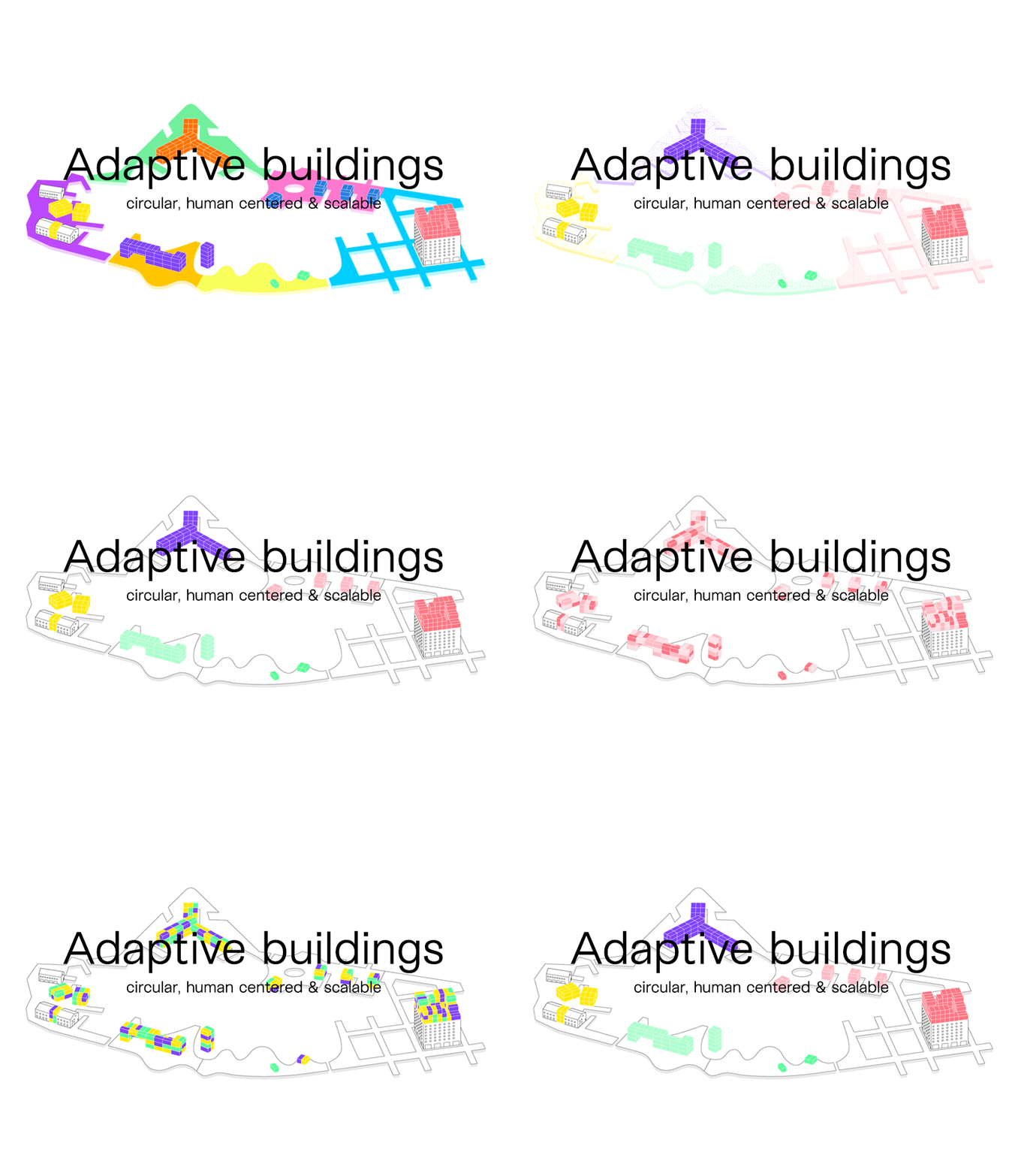

ADPT introduces a new system for how buildings are designed, built and adapted over time.
ADPT enables buildings to be tailored to specific sites and needs without starting from scratch every time.
By combining an element based kit-of-parts with digital systems, projects can be configured, delivered and updated with greater speed, cost predictability and circular material flows.
Futur2K
The construction sector is entering a fundamental transition. While most industries have adopted system-based and product-oriented approaches, buildings are still largely developed as one-off projects, resulting in high costs, long planning cycles, fragmented supply chains, high CO2 emissions and significant material waste.
With ADPT, Futur2K is developing a system architecture for scalable, configurable and circular buildings.
Operating at the intersection of digital technology, architecture, engineering and industrialized production, we collaborate with partners from industry and research to develop the physical and digital system architecture for our resource-efficient, system-based construction.
Current Status
ADPT was selected as one of the first case studies for the Circular Buildings Toolkit, developed by the Ellen MacArthur Foundation together with Arup. ADPT has since gained recognition through German BSFZ innovation certification, multiple funding programmes and competitive project selections. This has led to the first 3.050 square meter ADPT Pilot Ensemble (4 Buildings), which is currently in planning and will be completed in 2027/28.
We are still at an early stage, but with European, federal and regional innovation funding secured, we are now building the core team to transform years of research into a scalable system for configurable and circular buildings.
BUILDING SECTOR
The Problem
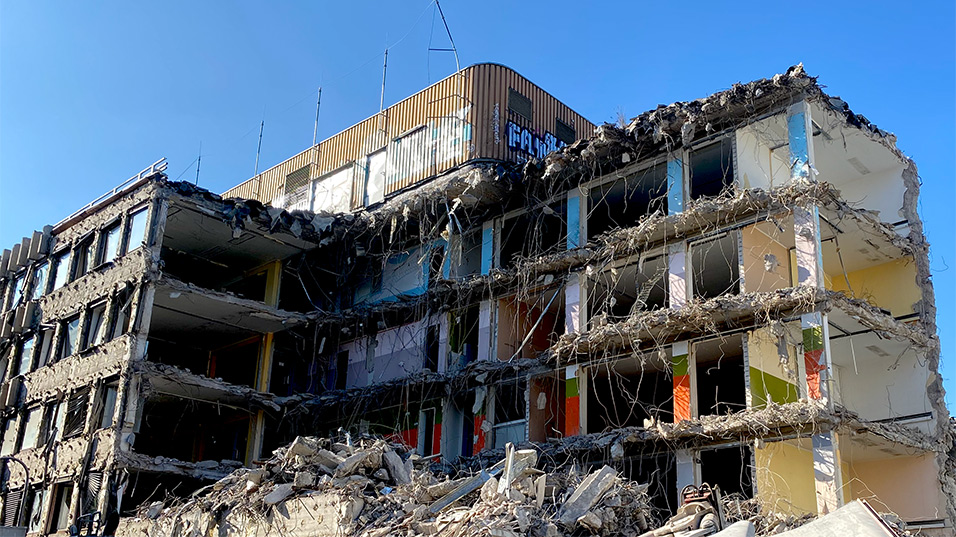
Construction is one of the largest industries in the world — yet most buildings are still developed as one-off prototypes.
For nearly every project, design, engineering and supply chains are reinvented from scratch.
This leads to fragmented processes, long planning cycles, cost uncertainty and significant waste of time, money and material.
While industries such as automotive, aerospace or electronics rely on system architectures and product platforms, buildings are still typically conceived as isolated projects.
As a result, innovation is difficult to scale, circular material flows are hard to establish and construction productivity has remained largely stagnant for decades compared to other industries.
Structural challenges of the building sector
Fragmented production
Each project requires new planning, coordination and technical solutions. This results in slow planning processes, fragmented supply chains and significant uncertainty regarding costs and timelines.
Limited adaptability
Most buildings are designed for a single purpose and moment in time. When needs change, buildings are often demolished and rebuilt instead of adapted — leading to the loss of materials, embodied energy and asset value. Buildings who loose their function over time, often turn into stranded assets.
Linear material use
Construction consumes enormous amounts of resources. Most building materials are permanently bonded together, making reuse difficult and resulting in large volumes of construction waste.
The underlying issue
Buildings are still treated as isolated projects rather than configurable systems.
As long as this logic persists, productivity gains, circular material flows and scalable innovation remain difficult to achieve.
DEVELOPMENT PARTNER
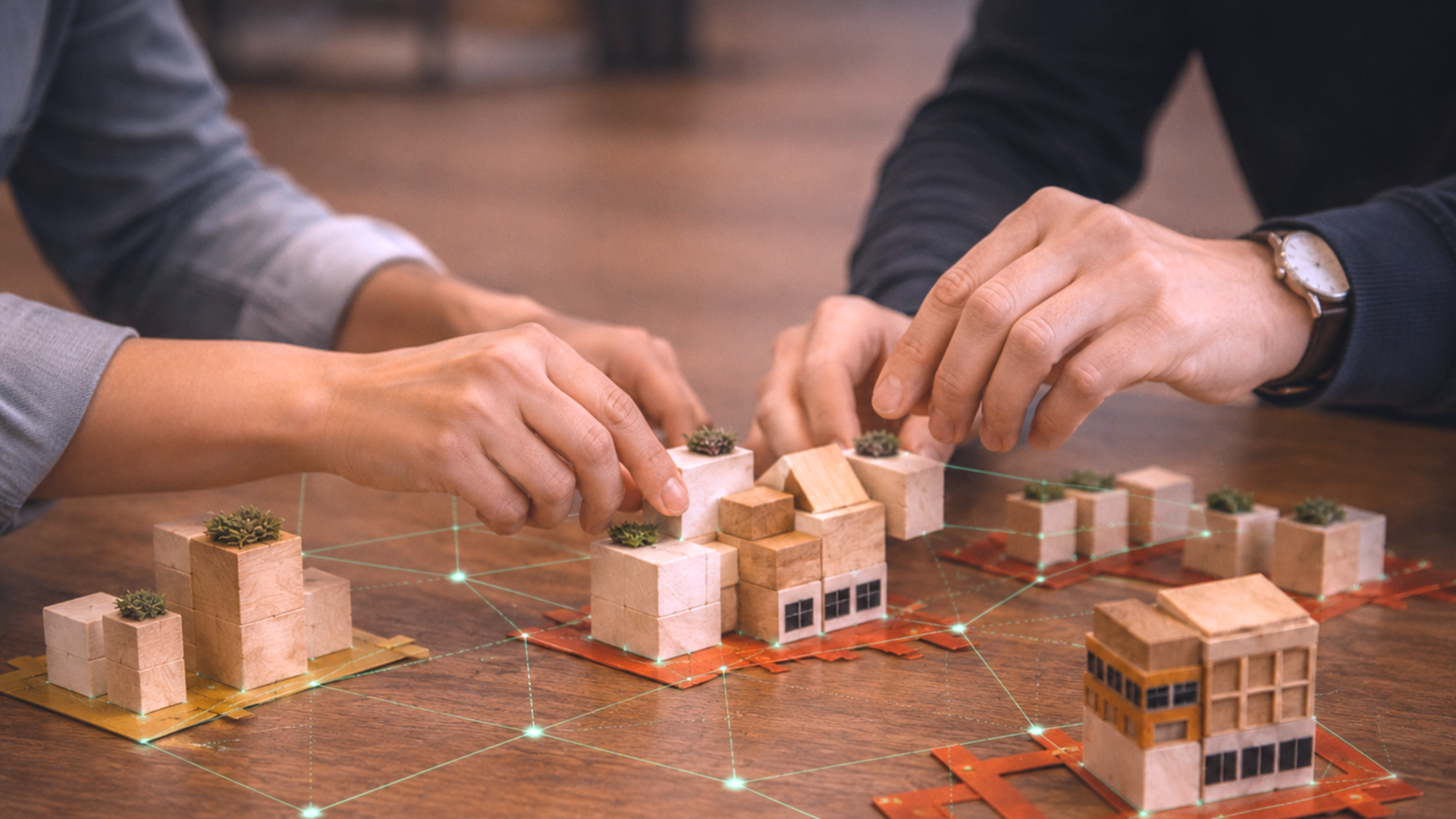
Developing a new system architecture for buildings requires expertise beyond any single discipline.
Futur2K works with partners from architecture, engineering, manufacturing, research and digital technology to develop the physical and digital foundations of system-based construction.
Key collaborators include Arup, a global leader in engineering and sustainable design, and Ruhr University Bochum, whose research contributes to the digital transformation of the construction sector.
Together, these collaborations help translate research into practical systems designed for scalability.
TEAM & ORIGINS
Founded in 2021 as a research initiative, Futur2K began exploring new approaches to system-based and circular construction.
The initiative emerged from three simple observations: buildings are still reinvented for every project, construction processes remain highly inefficient, and many buildings fail to support long-term human health and well-being.
During the following years, the team focused on research, concept development and prototyping physical components of ADPT. This work laid the conceptual and technological foundations for Futur2K’s approach to system-based construction.
In 2026, Futur2K secured public innovation funding and is now evolving into a dedicated full-time venture supported by a strong network of industry and research partners.
The core team combines expertise in architecture, engineering and systems thinking and is now expanding with additional capabilities in digital systems and software development.
If you want to contribute to the next generation of system-based construction, explore our open roles here. We look forward to hearing from you.
ADPT
Configurable building systems.
ADPT (pronounced „adapt“) combines three fundamental principles of next-generation building systems: adaptability, predictability, human-centered design.
Together, these principles enable buildings that can evolve over time while improving economic, environmental and user outcomes.
ADAPTIVE
ADPT enables buildings to be configured for today and adapted for tomorrow.
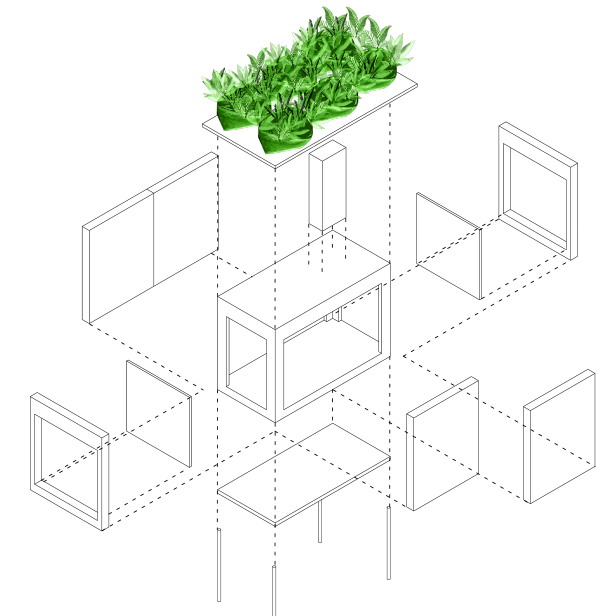
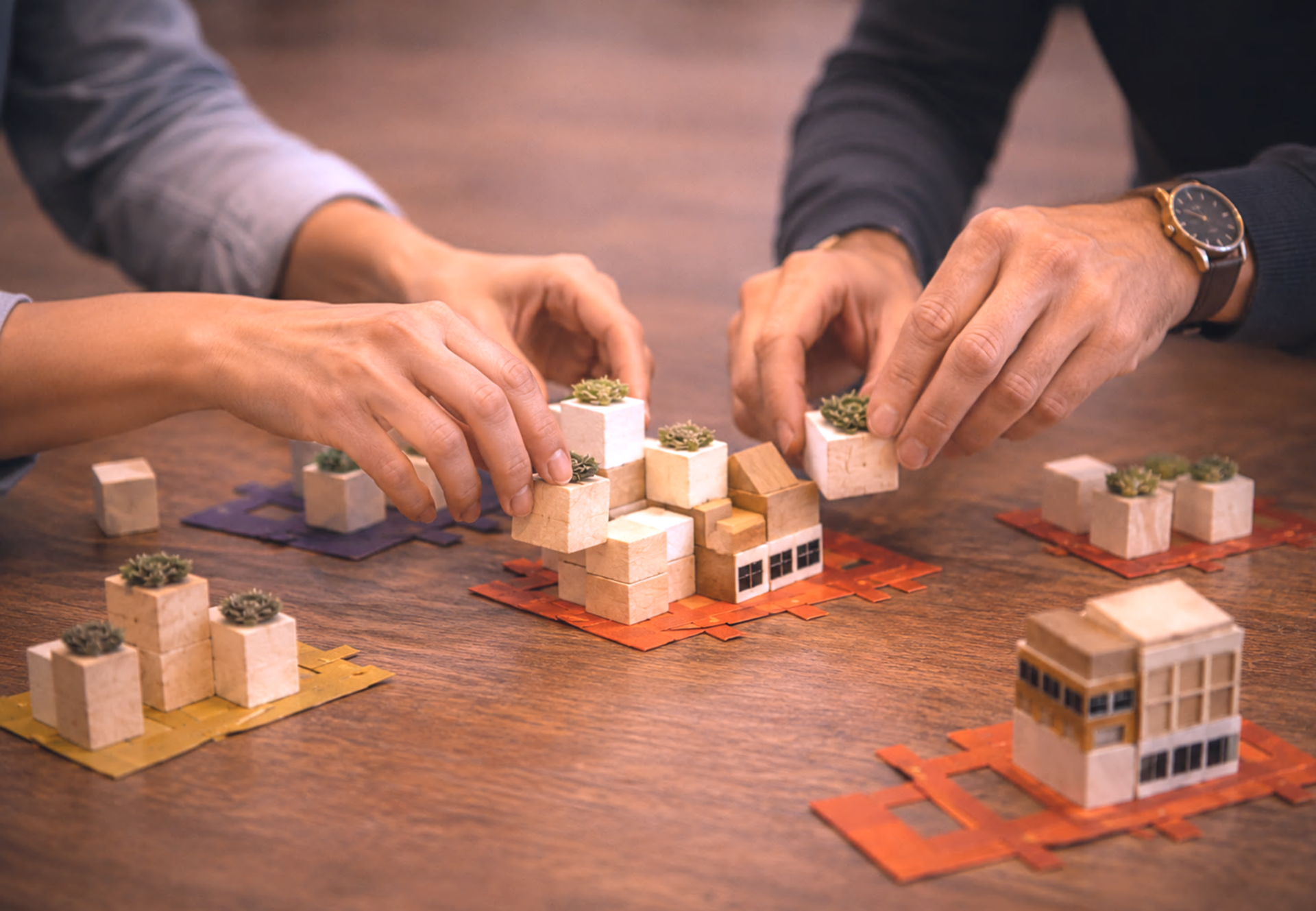
ADPT buildings are configured from modular and interoperable components.
They can be tailored to specific sites and user requirements, and adapted, retrofitted, expanded, relocated or repurposed as needs evolve.
This extends asset lifecycles, preserves value and supports circular material flows.
EFFICIENT & PREDICTIVE
Earlier certainty. Better decisions. Reduced risk.
ADPT replaces project based one-off design with system-based configuration. This enables projects to be tailored to specific sites and needs while leveraging continuously optimized components and processes.
ADPT reduces planning and production complexity and improves predictability regarding costs, timelines and building performance.
This means faster delivery, greater certainty and significantly reduced development risk.
HUMAN-CENTERED
ADPT starts with people, not buildings.
Healthy materials, human-centered design, high-quality indoor environments and adaptable layouts that evolve with changing users and needs support long-term health, comfort and performance.
Because buildings only remain sustainable when they continue to serve people well, human-centered design is at the core of ADPT.
USE SCENARIOS
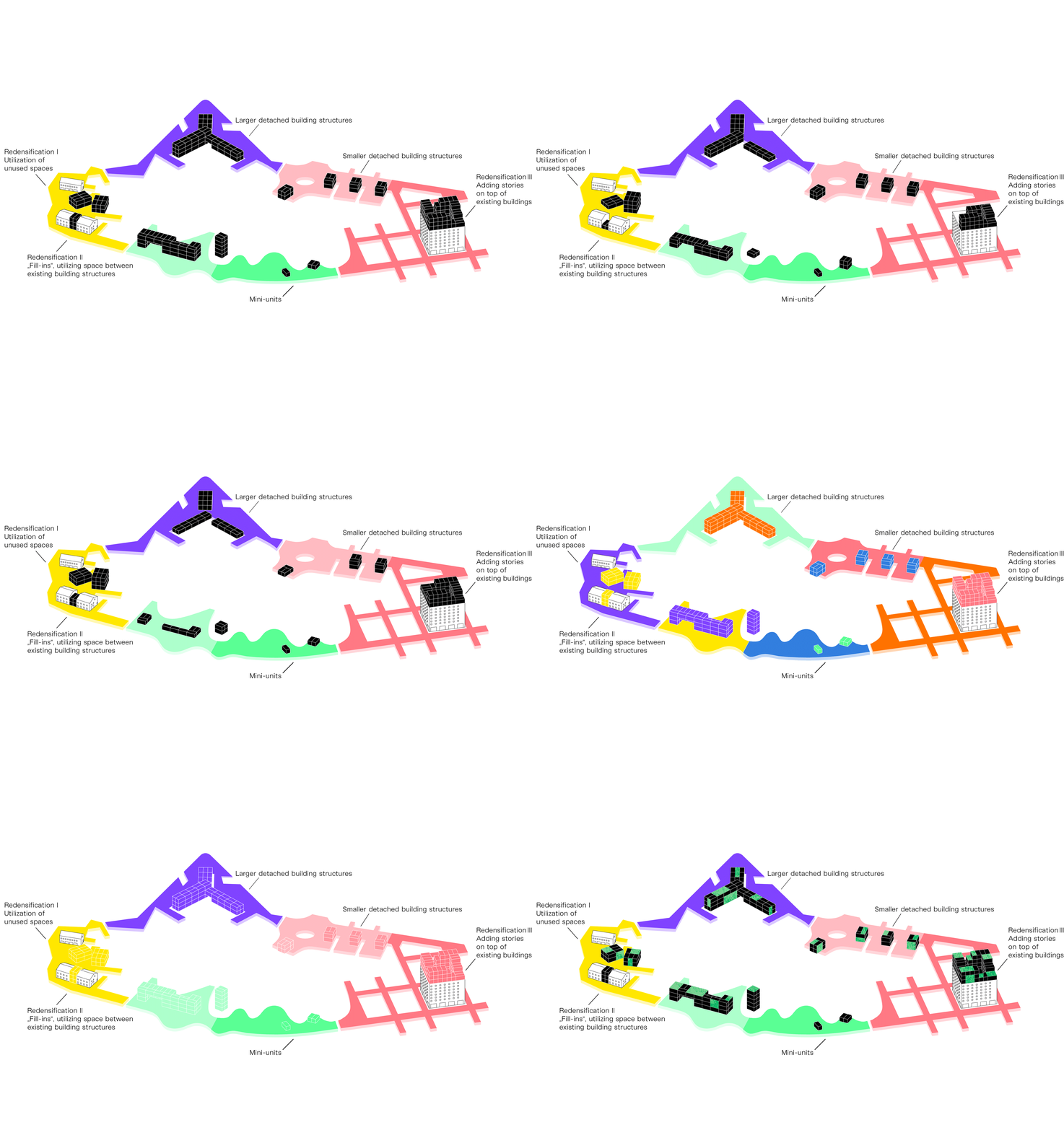
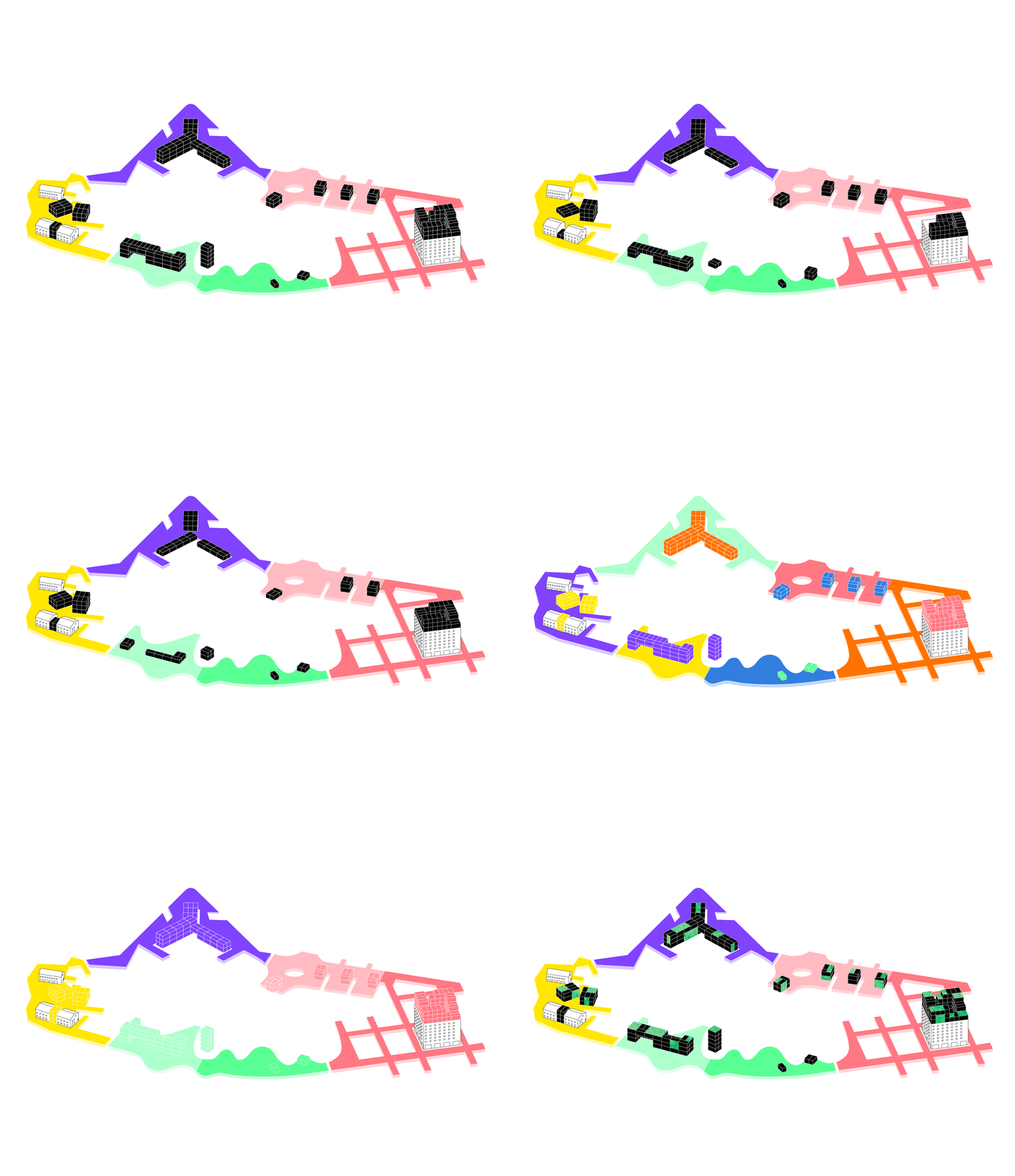
Different contexts. One system architecture.
ADPT buildings can be deployed across different development scenarios and spatial contexts:
Standalone buildings
High-quality buildings that integrate into natural landscapes.
Urban infill
Activating underused spaces within existing urban structures, enabling cities to create additional housing or commercial space within existing boundaries.
Vertical extension
Adding new floors to existing buildings to increase density without consuming additional land.
Flexible small-scale units
Compact building units that activate underused or transitional sites and respond to changing needs.
Multiple applications. One design logic.
Flexibility enables resilient buildings
The flexibility of the ADPT system enables buildings to respond to specific sites, changing needs and evolving uses over time.
Instead of fixed structures with limited lifespans, ADPT buildings are designed as adaptable systems whose layers and components can be attached, detached and reconfigured.
This allows floorplans to be adjusted, extended or reorganised with minimal effort — making renovation, upgrading and functional changes significantly easier and more cost-efficient.
Buildings can evolve with new tenants, regulations or market demands.
By enabling reversible and interoperable building components, ADPT significantly improves long-term asset resilience.
From Linear to Circular to Adaptive Buildings
Most buildings still follow an energy- and resource-intensive linear lifecycle that generates significant waste and erodes asset value.
Circular economy introduces loops such as reuse, refurbishment, remanufacturing and recycling to keep materials in use longer.
ADPT extends this concept to the level of entire building systems.
Instead of circulating materials alone, ADPT enables entire modules, components and building structures to remain in circulation within the ADPT ecosystem.
ADPT buildings therefore function both as material banks and as a reservoir of recoverable building components.
This approach preserves material and asset value, reduces resource consumption and enables a more efficient and resilient construction model — while reducing dependency on volatile resource markets and global supply chains.
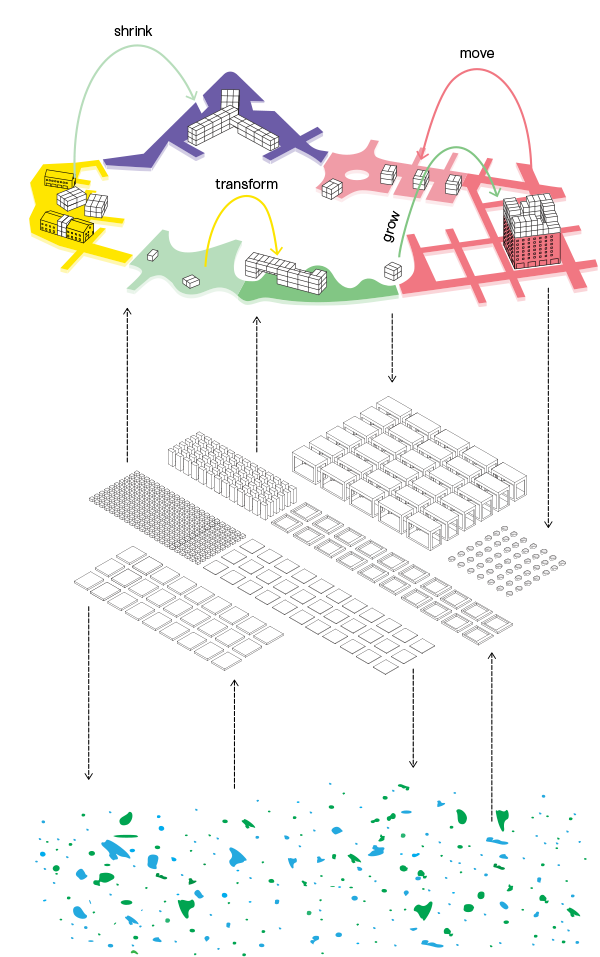
The ADPT System Cycle
ADPT structures buildings across three interconnected layers:
Materials ↔ Components ↔ Configurable Buildings
Circular materials form standardized, interoperable components that can be configured into adaptive buildings.
This system architecture enables buildings to be tailored to specific sites while remaining adaptable and reusable over time.
Sustainability performance indicators – real world data from Prototype 1
The first physical MVP was used to test the flexibility of structural elements and to explore circular materials and supply chains.
Aiming at climate positive solutions and zero waste, the first prototype demonstrates the potential of the ADPT-system. Results show that more carbon has been captured within the prototype than was emitted throughout the entire extraction and production process.
These results represent an initial step towards scalable climate-positive and adaptive construction systems.
SDG’s IMPACTED BY ADPT (SELECTION)
3 – GOOD HEALTH AND WELL-BEING
7 – AFFORDABLE AND CLEAN ENERGY
8 – DECENT WORK AND ECONOMIC GROWTH
9 – INDUSTRY, INNOVATION AND INFRASTRUCTURE
11 – SUSTAINABLE CITIES AND COMMUNITIES
12 – RESPONSIBLE CONSUMPTION AND PRODUCTION
13 – CLIMATE ACTION
15 – LIFE ON LAND
17 – PARTNERSHIPS FOR THE GOALS
Find out more about the goals here.

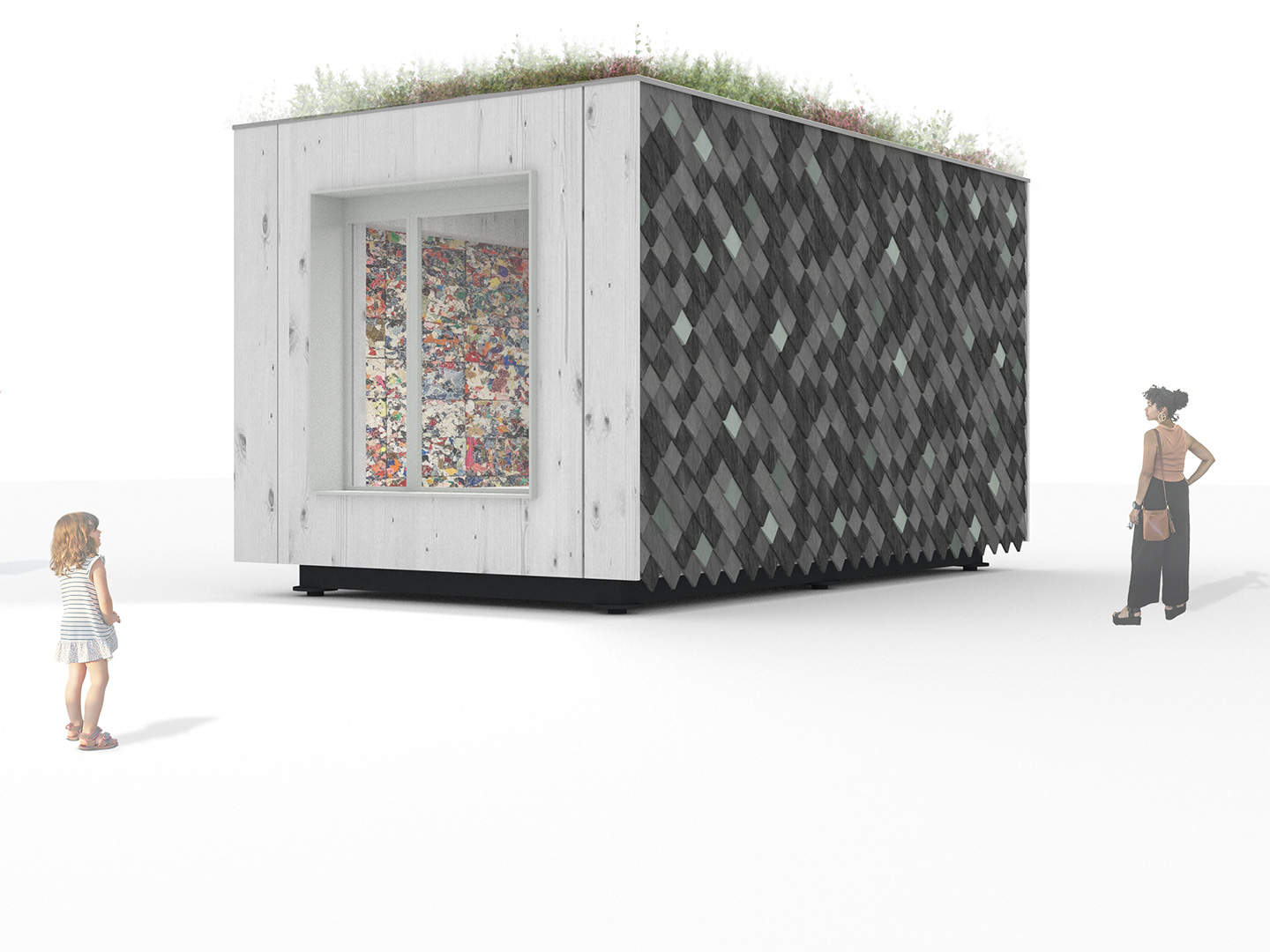
Prototype 1 – circular module
Prototype 01 – circular module
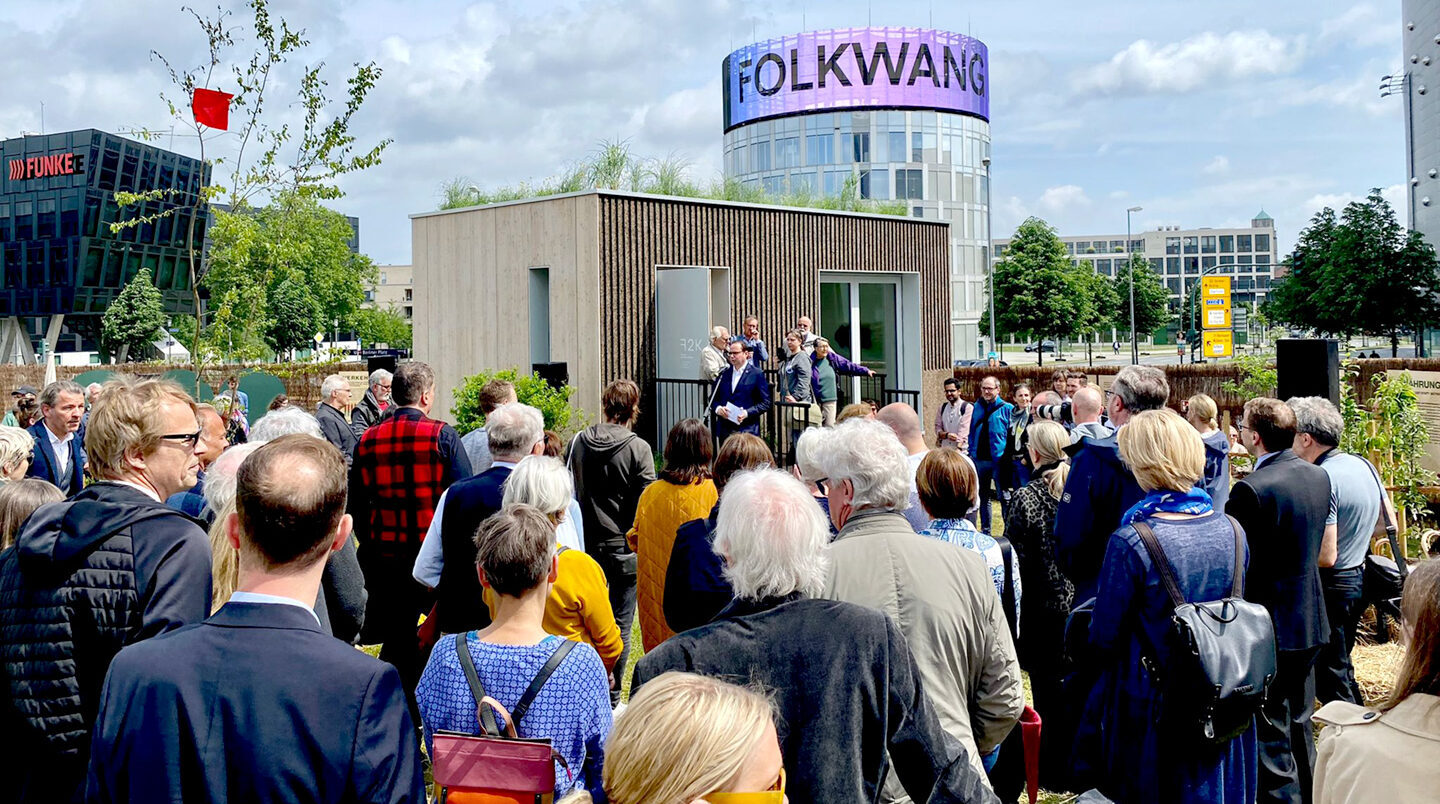
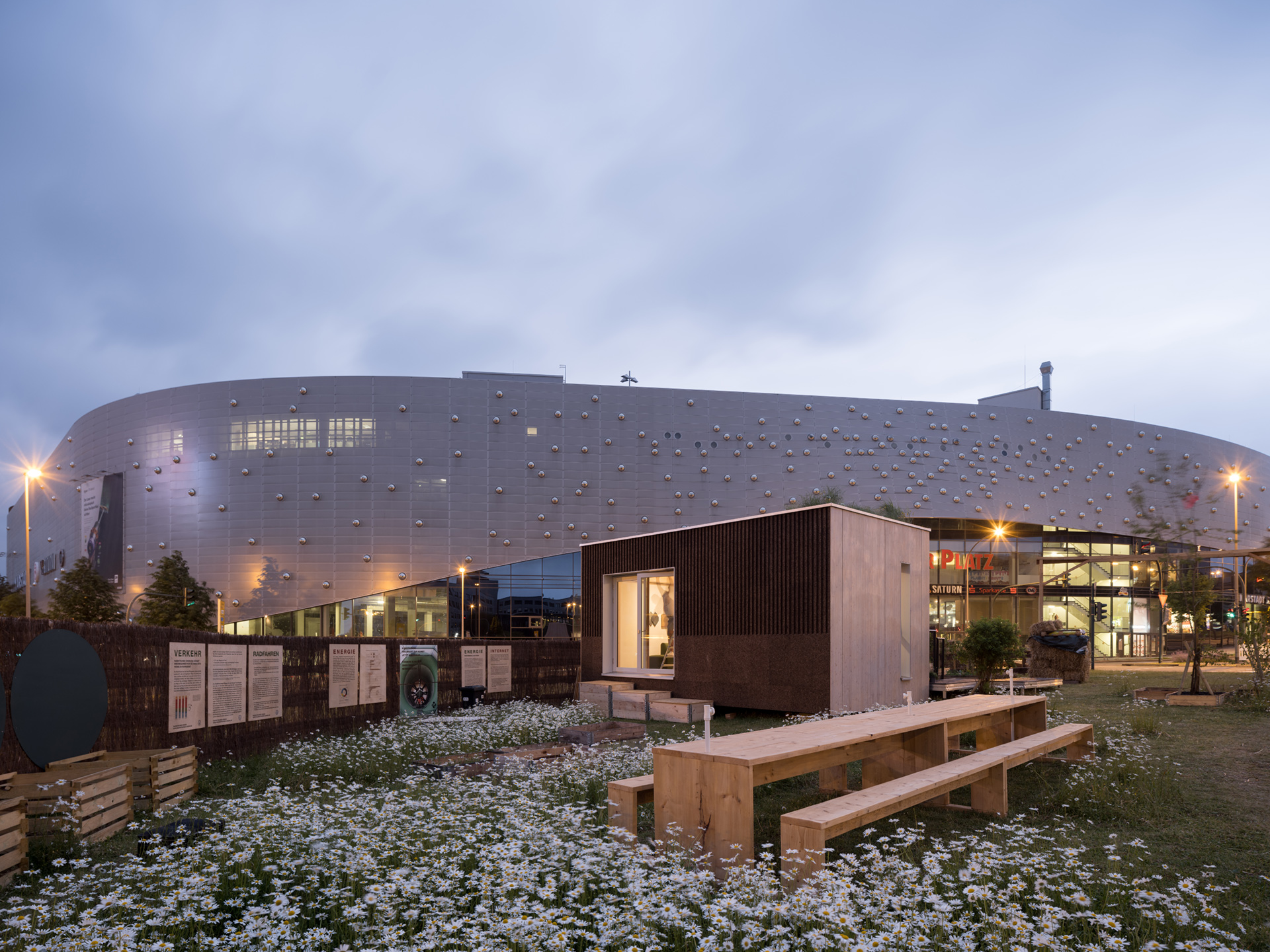
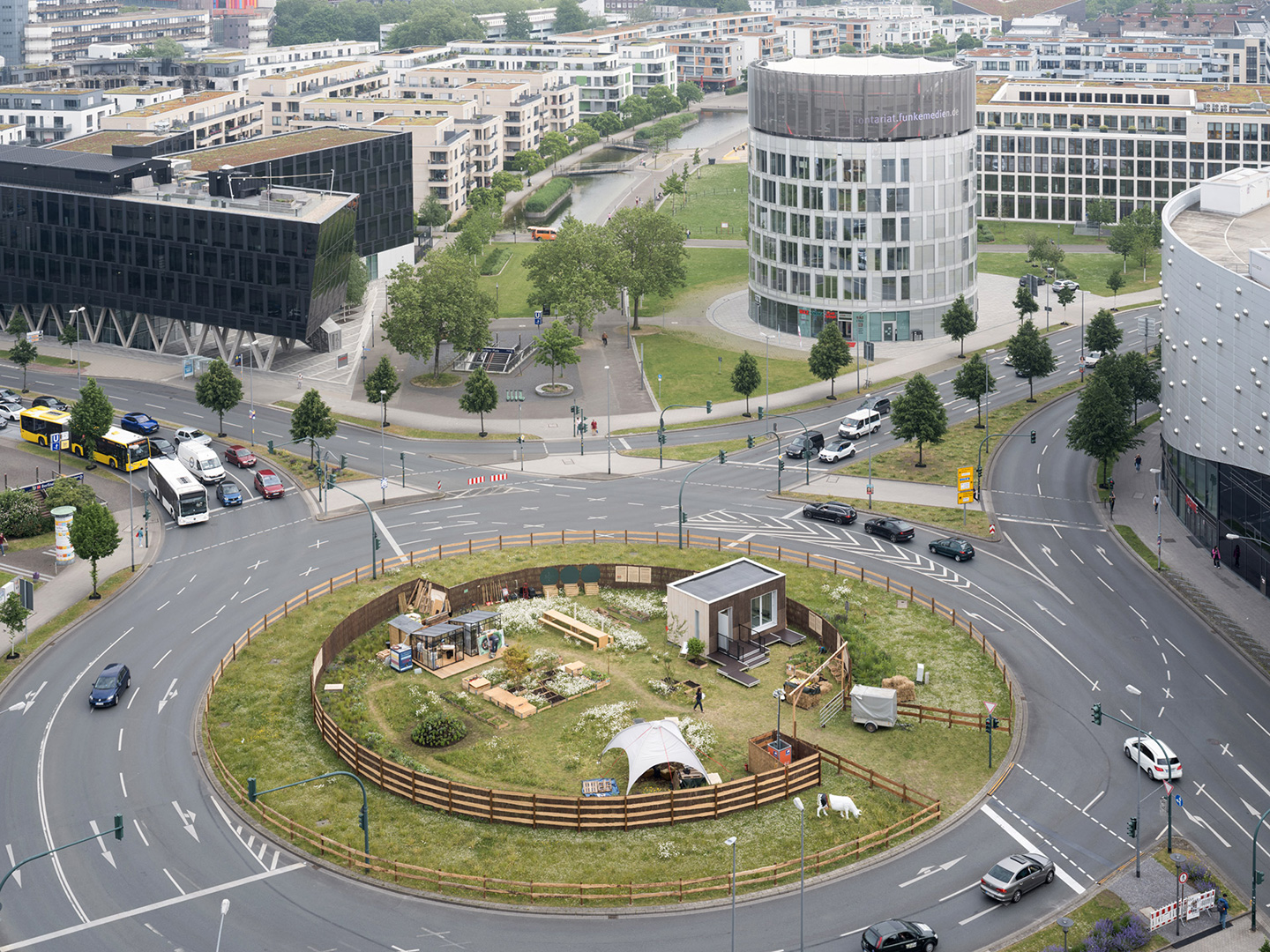
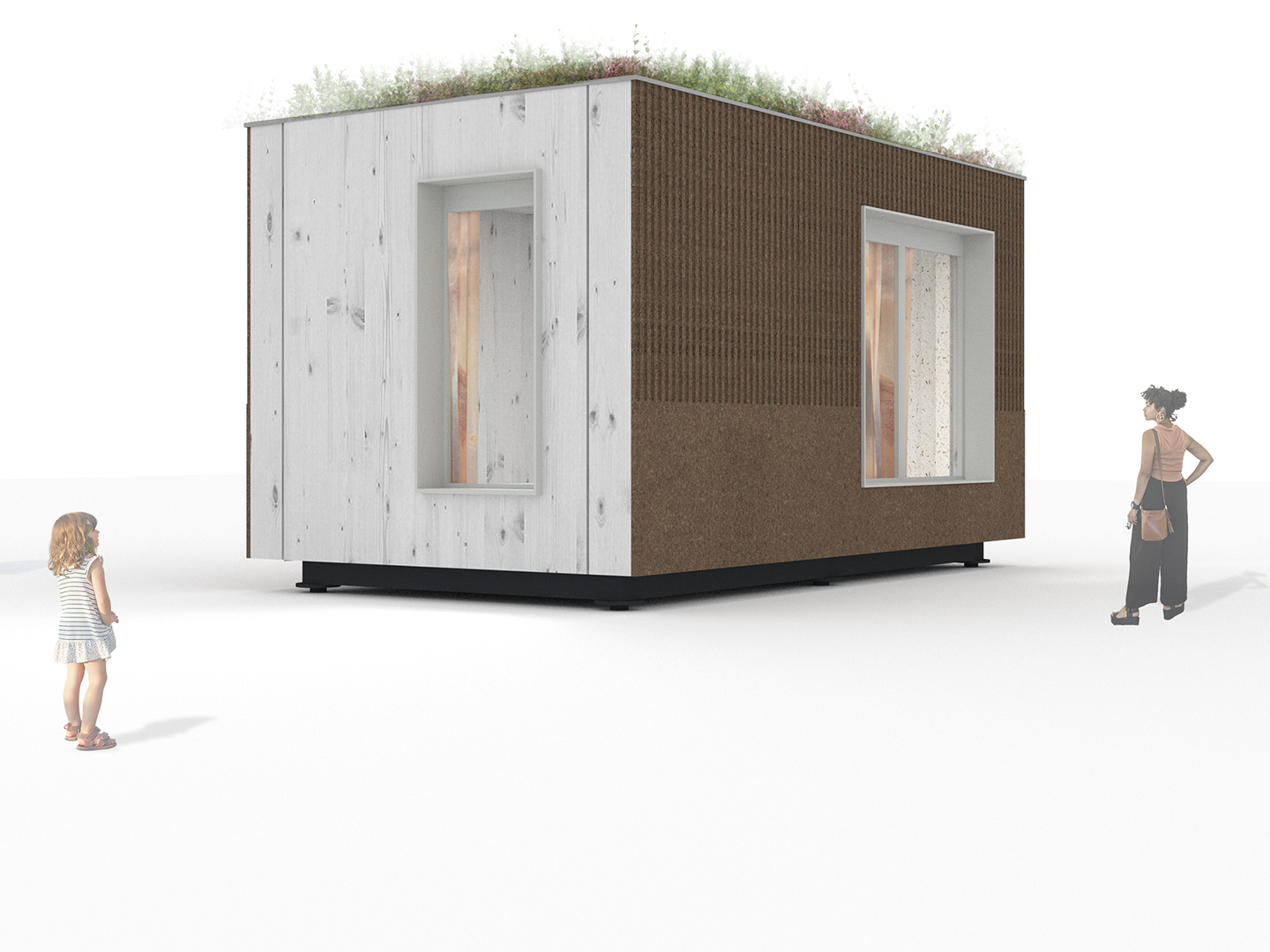
The first physical prototype of the ADPT system, “Building Block No. 1,” has been chosen as one of the first case studies for the circular building toolkit by EllenMacArthur Foundation and Arup and was exhibited at Museum Folkwang in Essen during the museum’s centenary exhibition “Folkwang and the City – how do we want to live tomorrow”.
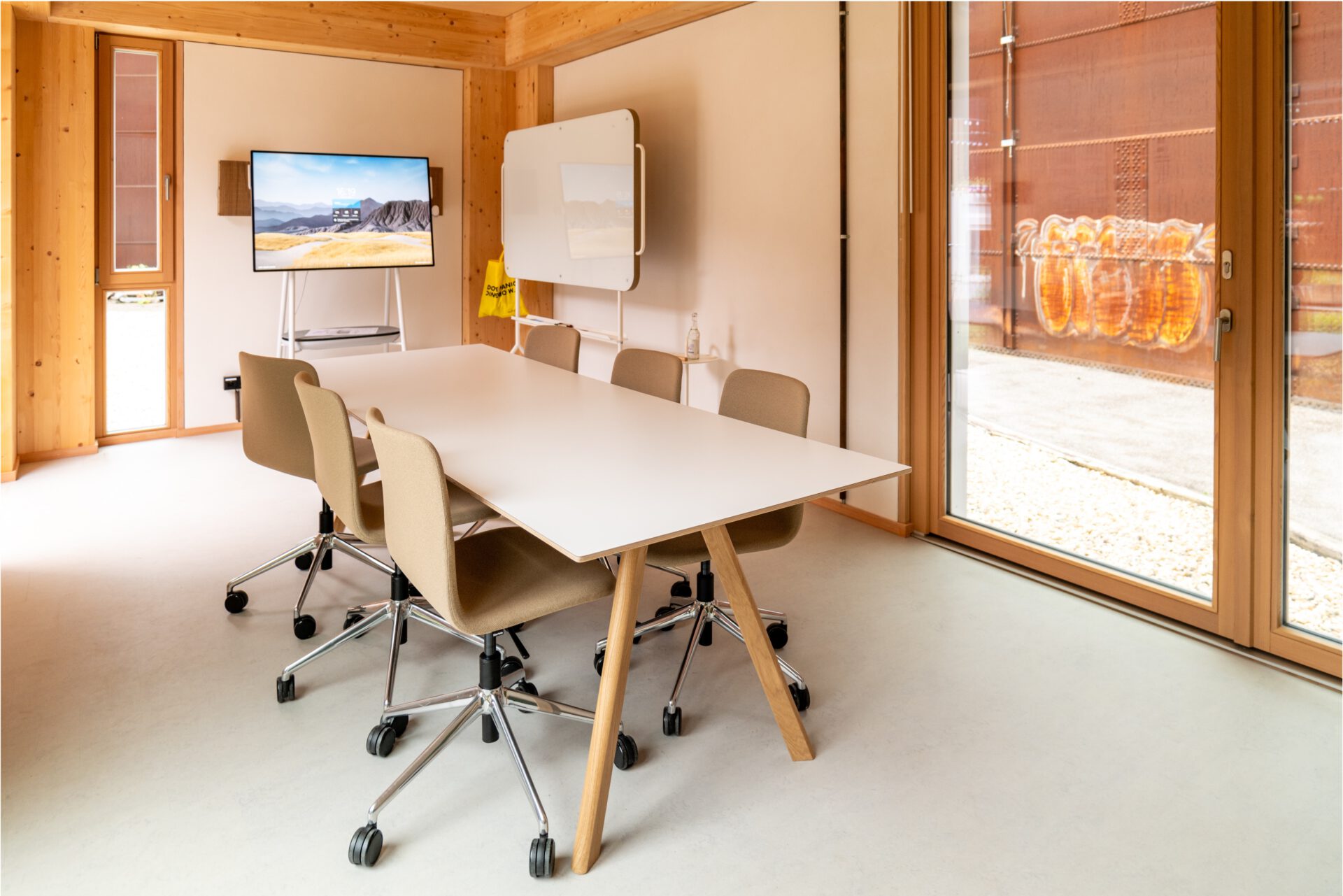
The installation presented a full-scale ADPT module and served as an experimental platform to test circular materials, modular construction principles and adaptive building strategies.
Located within one of Europe’s largest urban regions and now situated on the site of the UNESCO World Heritage Zollverein, the prototype creates an interface where a local common good organisation, visitors, architects and decision-makers can explore how configurable buildings contribute to climate-responsible and future-proof urban development.
Impressions from site / exhibition opening
Prototype 2 – From circular module to adaptive building
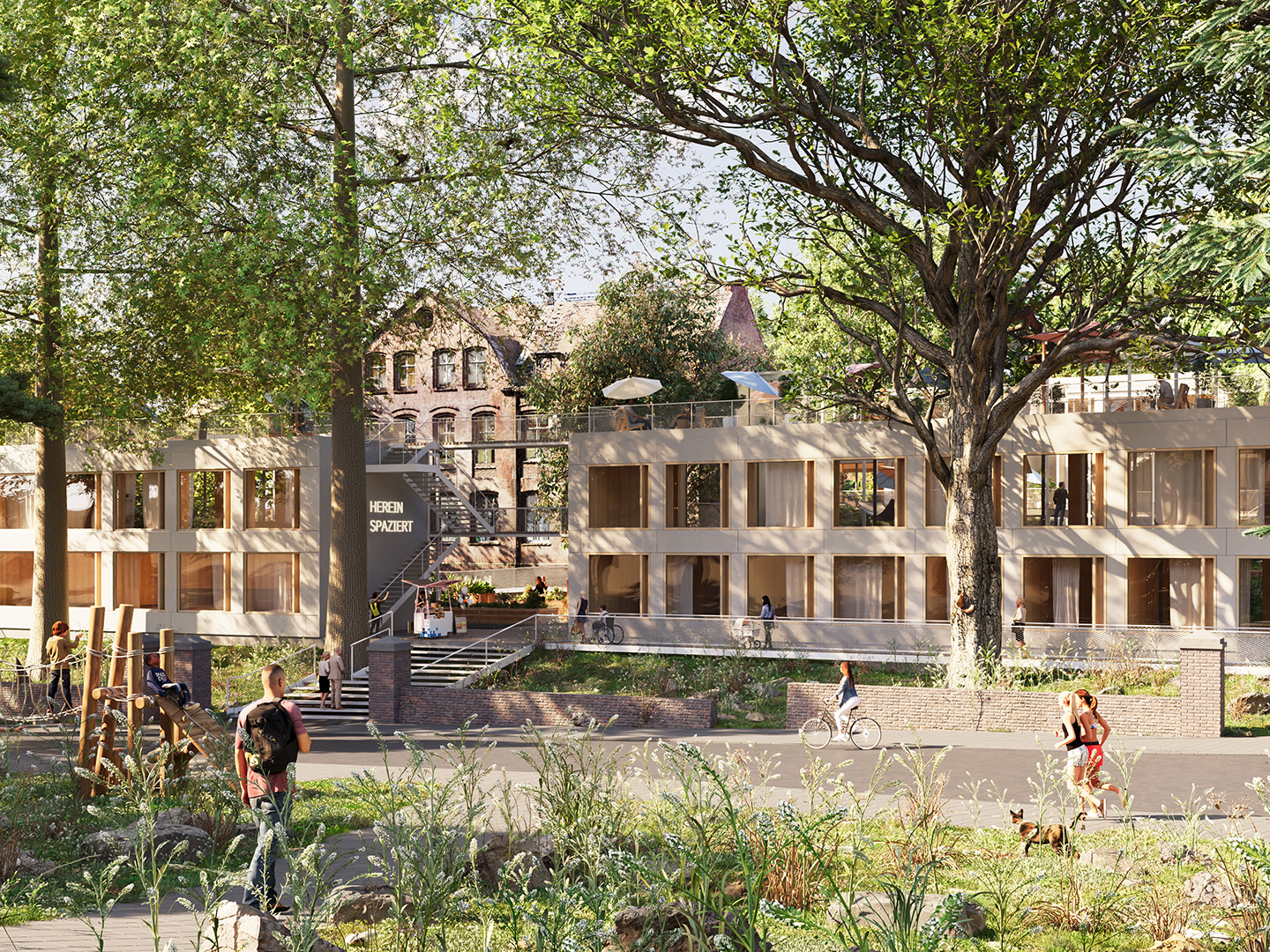
First real-world implementation of ADPT – inclusive housing
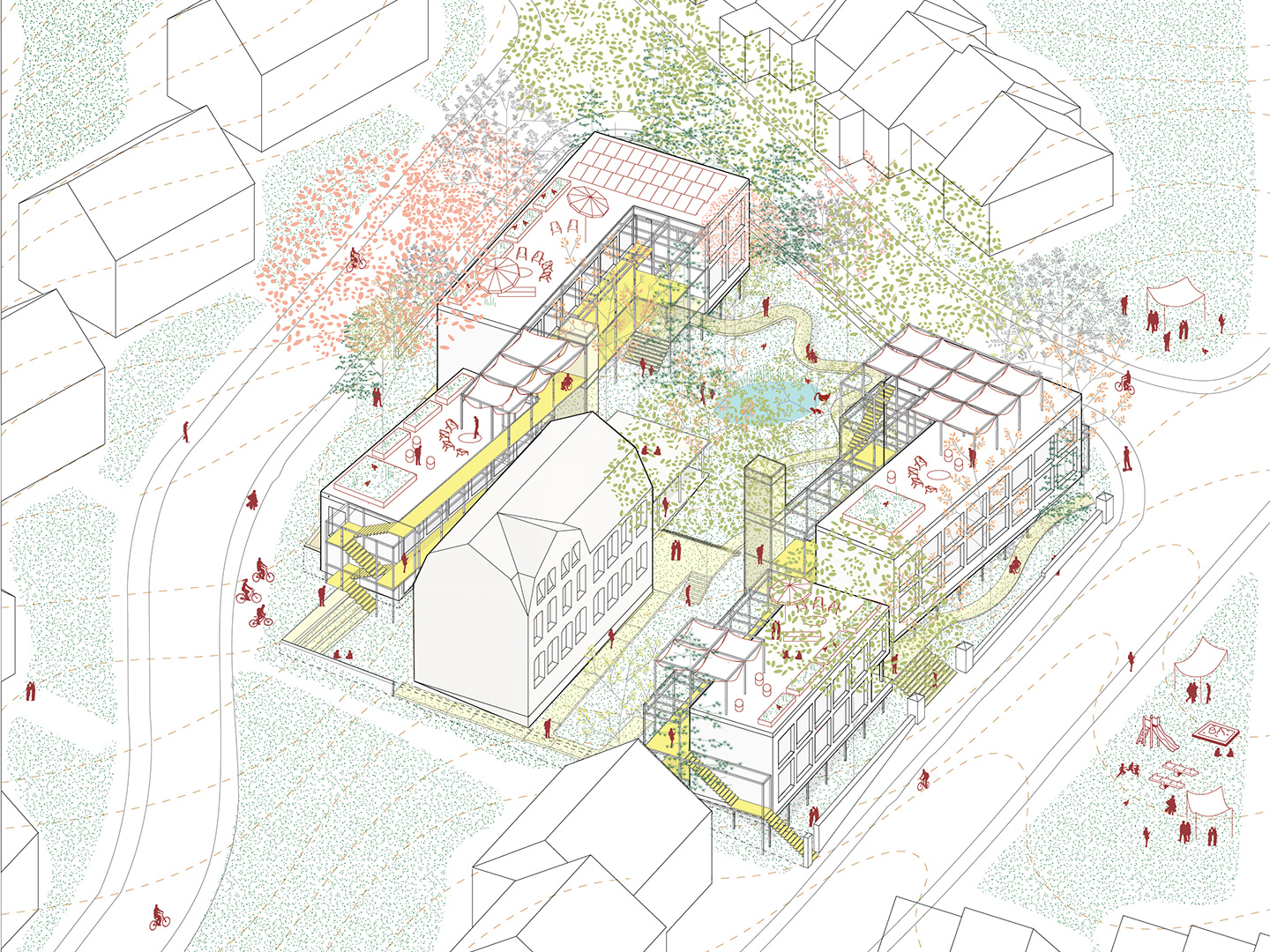
The first ADPT pilot building is currently being realized as an inclusive residential project in collaboration with Aktion Mensch and ARUP.
The project has been selected as a pilot project within the German federal innovation program “Zukunft Bau”, which supports pioneering projects shaping the transition of the building sector in Germany towards future-proof, climate-responsible and resource-efficient construction.
As the first real-world implementation of ADPT principles in the residential domain, the project demonstrates how ADPT-based-buildings can support inclusive, health-promoting and community-oriented living while also demonstrating how new building structures can be sensitively integrated into an existing site of high ecological value.
Project: ADPT Pilot for inclusive Housing – Kunstwerkerschule Essen
Collaboration: Aktion Mensch, ARUP & F2K
Funding: Federal Ministry of Housing, Urban Development and Building (BMWSB)
Scope: First real-world implementation of ADPT Principles in a residential project
ADPT DEVELOPMENT ECOSYSTEM
INDUSTRY & RESEARCH
Arup
Arup University
Institute for Digitization of the building industry
(University Duisburg-Essen)
PROTOTYPE & MANUFACTURING
PROTOTYPE & PRODUCT PARTNERS
Bang & Olufsen
Busch Jäger
Claytec
e.on
Forbo
Good plastic
Magis
Nornorm
Plantile
Pretty Plastics
Viabizzuno
Vitra
Zipse GmbH & Co. KG
LEGAL
COMMUNICATION
Help shape the future of circular construction
Futur2K is now transforming years of research into a scalable system architecture for configurable and circular buildings. We are currently building the core team behind ADPT.
Join us in shaping the physical and digital foundations of the ADPT system architecture.
Want to get in touch?
© 2026 Futur2K GmbH · All images and graphics © Arup and F2K unless otherwise noted · Impressum · Datenschutz